

Singapore Monsoon Guide: Expert Tips to Prevent Mold on Luxury Leather and Suede Wear (2026 Edition)
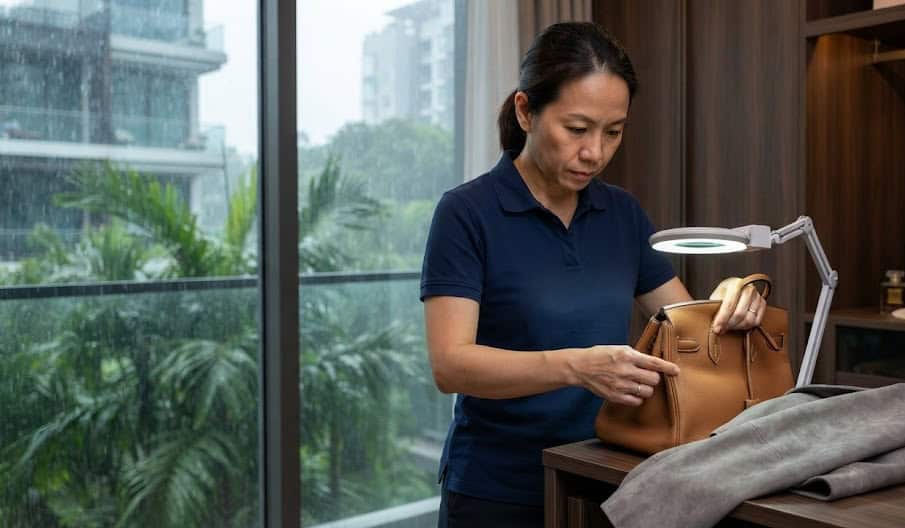
High relative humidity during the Northeast and Southwest monsoons accelerates fungal spore germination on organic luxury leathers.
The Double Monsoon Threat to Singapore’s Luxury Closets
Living in Singapore means adapting to a tropical climate shaped by two major weather patterns: the wet Northeast Monsoon from November to March and the humid Southwest Monsoon from June to September. When these monsoon seasons bring heavy, continuous rainfall, the relative humidity (RH) inside our homes often climbs to 90 percent or higher. While we can easily stay dry indoors, our wardrobes do not have the same protection. High-humidity environments, especially when air circulation is low, turn closets in condominiums and HDB flats into ideal breeding grounds for airborne fungal spores like Aspergillus and Penicillium.
For collectors of luxury fashion, this seasonal humidity spike is a major concern. High-end leather jackets, designer handbags, and premium suede shoes are particularly vulnerable to moisture-related issues. Unlike synthetic materials, genuine animal hide is highly porous and absorbs water vapor directly from the air. When moisture builds up within these delicate fibers, it triggers the germination of mold spores, which can quickly spread across your favorite pieces if left unchecked.
Fungal infestations do not just leave behind unsightly white or green powdery spots; they also release a persistent, musty smell that can be very difficult to remove. If a mold colony is allowed to grow on leather or suede for more than a few days, the fungal roots—known as hyphae—will dig deep into the material’s pores. These roots feed on the natural oils and proteins within the skin, causing permanent staining, color fading, and structural weakening of the fibers. Protecting your luxury investments during Singapore’s wet seasons requires a clear understanding of leather care and proactive storage practices.
The Biological Hunger: Why Fungi Feast on Leather and Suede
To prevent mold from damaging your luxury wear, it helps to understand why leather is such an attractive host for fungal growth. Leather is not a smooth, synthetic plastic; it is a complex, organic animal hide composed primarily of collagen proteins. During the tanning process, the hide is treated with natural fats, oils, and tanning agents to keep the collagen fibers flexible and prevent them from drying out and cracking.
These natural lipids and proteins provide a rich source of nutrients for fungal spores. When ambient humidity rises above 65 percent, microscopic mold spores floating in the air settle on the leather. If moisture is present, these spores absorb water, swell, and sprout fine, thread-like roots. The fungi then release enzymes that break down the protective fats and oils in the leather, consuming the organic compounds and leaving the leather stiff, dry, and brittle.
The risk of mold growth depends heavily on the specific finish of your leather items. Finished leathers—such as saffiano or embossed patent leather—have a thin, protective polyurethane topcoat that blocks moisture and helps prevent spores from taking root. Unfinished aniline leathers (like delicate lambskin) have open pores and no protective coating, allowing them to absorb moisture and oils instantly. Suede is even more vulnerable. Created by splitting the hide to expose the soft, fibrous inner layer, suede’s fuzzy “nap” has a massive surface area that traps water vapor, skin cells, and microscopic dust, creating an ideal environment for mold to thrive.
Monsoon Leather & Suede Vulnerability Matrix
Protecting your luxury wear during Singapore’s high-humidity seasons requires a planned approach tailored to the different materials in your wardrobe. The table below outlines how common high-end leather types react to wet conditions and details their specific storage requirements.
| Leather Subtype | Moisture Absorption Rate | Mold Growth Risk | Key Structural Vulnerability | Safe Storage RH Zone |
|---|---|---|---|---|
| Finished Calfskin | Low. Protected by a thin polyurethane topcoat that resists water. | Moderate. Spores can grow on surface dirt or dust if left uncleaned. | The coating can peel or crack if exposed to heavy humidity for long periods. | 50% – 55% RH |
| Aniline Lambskin | High. Open pores absorb moisture and skin oils almost instantly. | High. The lack of a topcoat allows fungal roots to dig deep into the hide. | Fungal enzymes can cause permanent staining and make the leather stiff. | 45% – 50% RH |
| Split Suede | Very High. The fuzzy nap holds water droplets and traps airborne dust. | Extremely High. The large surface area is highly inviting to mold spores. | Water exposure can cause permanent matting, color bleeding, and mold stains. | 40% – 45% RH |
| Nubuck Leather | High. The sanded top layer absorbs moisture quickly, like suede. | High. The velvety texture easily traps organic dust and moisture. | Slightest moisture can cause dark water spots and lead to deep mold growth. | 45% – 50% RH |
| Patent Leather | Very Low. The thick plastic coating blocks water completely. | Low. Mold can only grow on surface oils or dust. | High humidity can cause the glossy coating to turn cloudy and sticky. | 50% – 55% RH |
As this matrix highlights, delicate materials like aniline lambskin and split suede have very low tolerance for moisture. To preserve these high-end items, you must monitor your closet’s humidity levels closely and take quick action to dry them if they are exposed to rain.
Visualizing Closet Humidity vs. Mold Growth Acceleration
The speed at which mold develops on luxury fabrics is directly linked to the relative humidity of your storage space. In a dry, well-ventilated room kept at a safe humidity level, mold spores remain inactive. However, when monsoon rains hit Singapore, closet humidity levels can quickly rise to dangerous levels.
The chart below shows how quickly mold colonies develop on untreated leather over a two-week period under different humidity levels. Keeping your wardrobe’s relative humidity below 55 percent stops mold growth completely, while allowing humidity to hover around 90 percent during heavy monsoon rains can lead to visible mold growth in just three to five days.
This graph shows how high humidity accelerates mold growth. Keeping your storage space below 55 percent relative humidity is the most effective way to stop mold from developing, protecting your delicate leathers and suedes from damage during Singapore’s wet seasons.
Monsoon Survival: Immediate First-Aid When Caught in a Downpour
If you get caught in a sudden tropical downpour along Orchard Road or while walking between offices in the CBD, your immediate steps can save your luxury leather and suede wear from permanent water damage and mold growth. Standard rainwater is not pure; it absorbs air pollutants, dust, and acids as it falls, which can leave behind stains and damage delicate hides if not treated quickly.
Your first step should be gentle blotting. Use a clean, dry white microfiber towel to press down on the wet areas, absorbing the excess water. Never rub or scrub the leather, as this can push water and surface dirt deeper into the open pores of the hide, causing permanent dark spots and damaging the smooth finish. For suede, use a dry sponge to gently press and lift water out of the nap, working in the direction of the fibers to keep them from matting.
Once you have removed the surface water, stuff the inside of your shoes, jackets, or handbags with clean, acid-free tissue paper or unprinted parchment paper. This helps maintain the item’s original shape and pulls moisture out from the inside. Do not use newspaper for this step, as the wet ink can easily bleed and permanently stain the interior linings of your luxury items. Let the stuffed items dry naturally in a cool, well-ventilated room under a ceiling fan. Never use high heat, such as hair dryers, clothes dryers, or direct sunlight, to speed up the drying process. High heat causes natural leather fibers to shrink, warp, and crack, leading to permanent damage.
If your luxury items have been completely soaked, standard home drying may not be enough to prevent deep mold growth. In these cases, seeking help from a professional leather and suede cleaning service is the safest way to fully dry and restore your items. Professional services can dry your valued pieces safely and apply specialized conditioners that keep the leather soft and flexible, protecting your investments from the effects of heavy monsoon rain.
Advanced Home Remediation: Safely Cleaning Light Mold Spores
If you open your wardrobe after a week of heavy monsoon rain and spot faint, white powdery patches on your leather jackets or designer bags, you need to act quickly but carefully. While the temptation is to grab a bottle of household disinfectant, standard cleaning products can cause permanent damage to premium leather. Using high-concentration rubbing alcohol, harsh chemical detergents, or pure household vinegar can dry out natural hides, strip the original dye, and leave behind unsightly faded patches.
For smooth, finished leather, the safest approach is to use a highly diluted, pH-balanced cleaning solution. Mix a tiny drop of mild baby wash with warm distilled water. Dampen a soft, lint-free white microfiber cloth in the solution, making sure it is damp, not wet. Gently wipe the mold spots off the surface using small, circular motions. Once the mold is gone, take a second cloth dampened with pure distilled water to wipe away any soap residue. Immediately dry the area with a fresh, dry towel. Never use raw vinegar on high-end aniline leathers like delicate lambskin; the high acidity can alter the hide’s natural pH, leading to permanent stiffness and color changes.
After removing surface mold, you must address the invisible spores that remain. Wipe down the entire item with a highly diluted isopropyl alcohol solution (one part alcohol to ten parts distilled water). This mild mixture is strong enough to neutralize remaining spores without stripping the leather’s natural protective oils. Once dry, apply a premium, wax-free leather conditioner to restore moisture and flexibility to the hide, keeping it soft and supple.
Visualizing the Optimal Storage Microclimate
To keep mold from returning to your luxury items, you must maintain a stable microclimate inside your wardrobe. Mold spores need specific environmental conditions to germinate and grow. By controlling both temperature and relative humidity (RH), you can stop fungal growth completely without drying out and cracking your leather.
The chart below shows the relationship between temperature and relative humidity, highlighting the absolute safe zone for storing luxury leather and suede. Storing your items in the green “Ideal Microclimate” prevents mold development while keeping the natural fibers flexible and healthy.
As this chart shows, keeping your closet environment controlled is key to preserving leather. Letting relative humidity drop below 40 percent can dry out leather and cause cracking, while allowing it to rise above 60 percent during monsoon seasons creates a high risk of mold growth. Keeping your wardrobe in the middle “Ideal Zone” protects your investments safely.
Wardrobe Engineering: Creating a Mold-Free Microclimate
In Singapore’s humid climate, standard wardrobe storage is often not enough to protect high-end fashion collections. Leaving luxury pieces in closed, dark closets without active moisture control creates a high risk of mold growth during the monsoon seasons.
Many homeowners rely on disposable moisture-absorbing tubs containing calcium chloride. While these are useful for small drawers, they are not sufficient for walk-in wardrobes or large closets during the wet season. They saturate quickly, and if they are knocked over, the highly corrosive chemical liquid can leak and cause permanent damage to your leather items. A more reliable solution is to use a dedicated, compressor-based electronic dehumidifier that drains directly, or to install low-wattage closet heating rods. These rods raise the temperature inside the closet slightly, lowering the local relative humidity and keeping the air dry.
How you organize your clothes also makes a big difference. Avoid packing your items too tightly on hangers, as proper air circulation is essential to prevent moisture buildup. Always store your luxury bags and leather jackets in breathable fabric dust bags. Never use plastic dry-cleaning covers, as they act like miniature greenhouses, trapping moisture inside and creating an ideal environment for mold to grow on your valued pieces.
Suede Prevention Protocols: Protecting Your Most Delicate Items
Suede is one of the most comfortable and beautiful materials, but its open-nap texture makes it highly vulnerable to rain, moisture, and mold. Unlike finished leather, suede has no protective topcoat, meaning it absorbs water vapor almost instantly, which can quickly lead to matted fibers and deep fungal growth.
To protect your suede shoes, jackets, and bags during the monsoon season, apply a high-quality, fluorocarbon-free water and stain repellent spray. These sprays coat the delicate suede fibers with a microscopic, hydrophobic barrier that repels water droplets while allowing the leather to breathe. Apply the spray in a well-ventilated area, letting the item dry completely before wearing it out in the rain.
Regular maintenance is also key to preventing mold. Use a soft crepe brush to groom your suede items weekly. Brushing removes surface dust, skin flakes, and microscopic organic particles before they can become food for mold spores. It also disrupts any early fungal roots before they can take hold in the nap, keeping the suede soft, clean, and in excellent condition.
The Professional Restoration Threshold: When to Seek Expert Help
While gentle home remedies can clear away light, surface mold, there are times when DIY methods are simply too risky for luxury items. If a mold infestation has gone deep into the lining, stitching, or internal structural boards of a designer bag, trying to scrub it clean at home can cause permanent damage to the delicate materials.
Luxury brands like Hermès, Chanel, and Louis Vuitton use specialized adhesives, structural stiffeners, and fine vegetable-tanned leathers that are highly sensitive to water and household cleaning products. Applying incorrect cleaning agents can dissolve these adhesives, causing fabric linings to separate, dyes to bleed, and leather panels to warp or shrink. If you notice mold returning to the same item repeatedly, it means the fungal roots are deep within the material, requiring professional care to fully neutralize.
Professional restoration services use advanced methods to save deep-soiled items safely. They use specialized solvent extraction and controlled ozone sanitization chambers to kill fungal spores deep inside the leather without using harsh liquids. This thorough process removes musty odors and disinfects your valued pieces completely, restoring their beauty and extending their lifespan.
Frequently Asked Questions about Monsoon Leather Care
Can I use tea tree oil to keep mold off my leather bags?
No, you should avoid using tea tree oil or other essential oils on luxury leather. While tea tree oil has natural anti-fungal properties, applying raw oils directly to leather can cause permanent dark stains, soften the hide excessively, and cause delicate dyes to bleed. Stick to pH-balanced, professional leather care products instead.
My suede shoes got soaked in a monsoon puddle. Can they still be saved?
Yes, but you must act quickly. Blot away excess water with a dry towel, stuff the shoes with acid-free paper to hold their shape, and let them dry naturally away from direct heat. Once dry, use a suede brush to lift the matted fibers. If the water has left deep dirt or salt stains, professional dry cleaning is recommended to restore the texture safely.
Why does mold keep returning to the same leather jacket every monsoon season?
This happens because surface cleaning only removes the visible mold. Fungal roots (mycelium) can stay alive deep within the porous hide or inside the inner fabric lining. When humidity spikes during the monsoon season, these roots sprout new surface mold. To stop this cycle, the jacket needs deep professional sanitization.
Is it safe to store luxury bags in airtight plastic boxes with silica gel?
Storing bags in airtight boxes is not ideal. While silica gel helps absorb moisture, airtight boxes prevent air circulation. If any moisture is trapped inside the box, it can create a humid environment that encourages mold growth. It is much better to store bags in breathable dust bags in a dry, well-ventilated closet.
Does professional leather dry cleaning remove the musty mold smell permanently?
Yes, professional cleaning is very effective at removing musty odors. Professional dry cleaners use specialized solvents and controlled ozone treatments that neutralize the odor-causing fungal spores and active mold deep inside the leather and lining. This process kills the mold completely, removing the smell and restoring freshness.
Professional Preservation for Your Valued Wardrobe
Protecting your luxury leather and suede wear during Singapore’s intense monsoon seasons requires a planned, careful approach. While simple home care steps can help manage light surface dust and minor water exposure, deep mold infestations and delicate materials require professional handling to avoid permanent staining, color fading, or fiber damage.
When dealing with high-end designer bags, structured leather jackets, or delicate suede shoes, seeking professional restoration is the safest way to preserve your investments. Our team is committed to providing the highest standard of care for your valued fashion pieces. As an NEA-licensed cleaning service since 2011, we have spent over a decade helping Singaporean collectors protect and care for their finest garments. Trusted by over 43,000 Facebook followers and holding a consistent 4.8-star Google review rating, we use advanced, non-water solvent extraction methods and precise conditioning treatments to restore leather beauty safely.
Do not let seasonal humidity and rain damage your favorite fashion investments. Whether you need a deep, mold-clearing dry clean for a classic lambskin jacket or professional stain treatment for fine suede shoes, we are here to help. Contact us today through our online booking page or drop by our service center to restore your delicate leather and suede items to their original, beautiful condition.