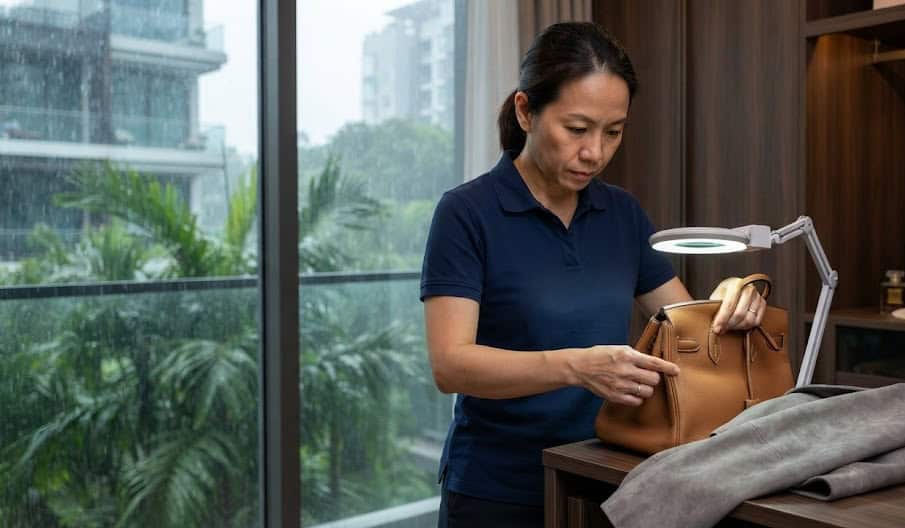


Singapore Haze Season Preparation: Why Deep Cleaning Curtains is Essential for Indoor Air Quality (2026 Guide)
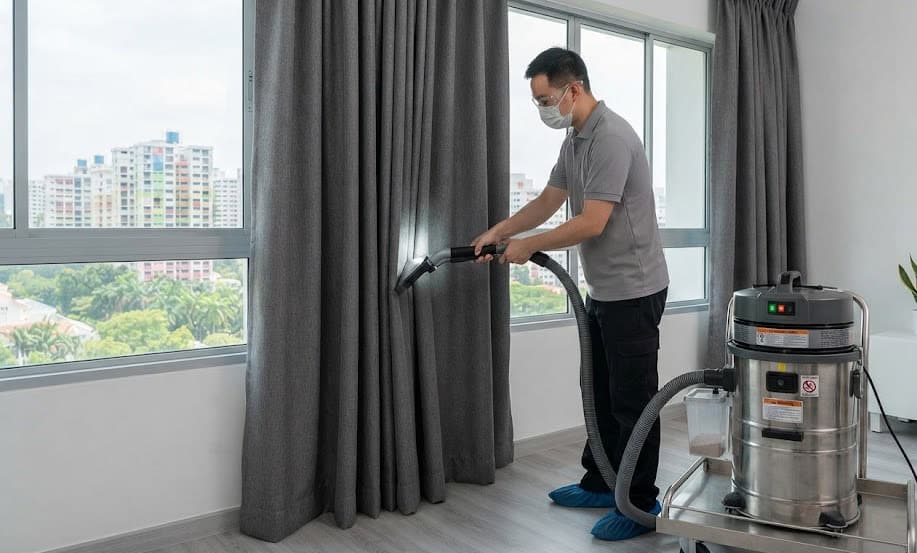
Window textiles act as passive indoor air filters, accumulating heavy concentrations of transboundary haze soot and fine dust particles.
The Invisible Haze Threat Inside Singaporean Homes
As the southwest monsoon wind patterns develop each year, Singaporeans bracingly monitor the National Environment Agency (NEA) weather portals. Transboundary haze has remained a persistent challenge for the region. While many of us immediately lock our windows and turn up the air conditioning when the 24-hour Pollution Standards Index (PSI) spikes, we overlook a basic vulnerability: our indoor home environment is not an airtight seal. Fine particulate matter, particularly PM2.5, is incredibly small, measuring less than 2.5 micrometers in diameter. These tiny particles bypass standard window frames, sliding glass door tracks, and structural vents in both heartland HDB flats and modern glass-clad condominiums alike.
A common misconception is that indoor air remains pristine simply because the windows are kept shut. Air exchange occurs naturally in every residential building. Every time you open your front door to grab a food delivery, step out to the corridor, or run your kitchen exhaust fan, a vacuum is created. This negative pressure pulls external air—and with it, high concentrations of haze soot—through the tiny gaps around your doors and windows. Once inside, these microscopic soot particles do not just hover in mid-air indefinitely. They drift toward your window openings, where they are immediately intercepted by your curtains, drapes, and blinds.
When haze particles settle inside your home, they cling to soft furnishings. The fabrics hanging directly in front of your windows act as a physical net, catching these pollutants. Leaving your window drapes unwashed during or after a high-PSI spell transforms them into secondary sources of indoor air pollution. Every time the wind blows, your ceiling fan runs, or someone draws the drapes, thousands of trapped PM2.5 particles are shaken loose and kicked back into your breathing space. This constant recirculation of fine dust can easily compromise the health of your family long after the blue skies return to Singapore.
The “Giant Air Filter” Phenomenon: How Curtains Suffer the Most
Your window curtains do a lot more than block the afternoon sun and provide privacy. From an aerodynamic perspective, they function exactly like a giant, passive air filter stretched across your household ventilation points. Because curtains hang directly in front of windows—the primary path for air entering and exiting your home—they catch the full force of incoming drafts.
As outdoor air squeezes through window gaps, it must pass through or around the curtain fabric. Fine particulate matter is highly sensitive to electrostatic charges. Synthetic curtain fabrics, such as polyester and nylon blends, naturally develop a static charge due to air friction and the dry breeze from indoor air conditioning. This electrostatic charge acts like a magnet, actively pulling airborne soot, industrial sulfur, and road dust out of the passing air and locking it deep within the weave of the fabric.
Natural fibers are not immune either. Cotton, linen, and silk are highly porous materials. Instead of using electrostatic attraction, they capture particles through physical impaction. The open, multi-layered structures of these natural fibers act like a maze. When microscopic haze particles enter the fiber pathways, they lose momentum and become trapped. Over a few weeks of exposure, a standard living room curtain can hold several grams of fine industrial soot, chemical residues, and biological allergens, significantly reducing the overall air quality of your home.
The Microscopic Threat Profile: What Is Lurking in Your Window Drapes?
To understand why dirty curtains are an indoor health hazard, we have to look closely at what transboundary haze actually contains. Unlike regular household dust, which is mostly made of dead skin cells and clothing fibers, regional haze is a complex chemical mixture. It is produced by burning peatlands, forests, and agricultural waste, resulting in a toxic blend of carbon soot, sulfate, ammonium, organic carbon compounds, and microscopic silica.
When these chemical pollutants settle into your curtains, they do not remain inert. Singapore’s high relative humidity, which regularly exceeds 80 percent, reacts with the trapped chemicals. The moisture in the air combines with the sulfate and nitrate compounds on your drapes to form mild acidic residues. This acidic buildup slowly degrades natural fabric fibers, causing them to turn yellow, thin out, and lose their strength.
This damp, chemical-rich fabric also creates an ideal breeding ground for biological allergens. Microscopic dust mites thrive in humid conditions, feeding on skin cells and nesting in soft fabrics. When your curtains trap organic forest-fire soot, it acts as an additional nutrient source for these pests. At the same time, mold spores carried in by the wind find a secure, undisturbed home in the damp fibers of your window drapes. The combination of chemical soot, active mold growth, and dust mite allergens turns your curtains into a major source of indoor respiratory triggers.
The Singapore PSI-to-Fabric Cleaning Correlation Matrix
Managing your indoor air quality during the dry monsoon months requires a planned approach. You cannot rely on a single annual clean to keep your home safe when pollution levels are fluctuating. The table below outlines how regional PSI spikes correspond to particulate accumulation in household drapes and recommends safe cleaning intervals for your fabrics.
| 24-Hr PSI Range | PM2.5 Category | Air Quality Status | Curtain Saturation Velocity | Recommended Cleaning Schedule | Key Medical Risk Profile |
|---|---|---|---|---|---|
| 0 – 50 | Normal / Low | Good | Very Slow. Minimal buildup of dry ambient dust over several months. | Routine wash every 5 to 6 months. | Negligible. Standard household allergen management only. |
| 51 – 100 | Moderate | Moderate | Moderate. Accumulation of urban smog, vehicle exhaust, and fine silica. | Professional deep clean every 3 to 4 months. | Mild eye irritation and throat dryness for sensitive individuals. |
| 101 – 200 | Elevated / High | Unhealthy | Rapid. Electrostatic synthetic fibers saturate within two to three weeks. | Deep clean within 14 days of PSI decline. | Triggers asthma attacks, sinus inflammation, and skin eczema flares. |
| 201 – 300 | Extreme / Dense | Very Unhealthy | Extremely Rapid. Heavy chemical soot and greasy tar paste onto fibers. | Immediate post-haze deep clean or professional vacuuming. | Severe respiratory distress, constant coughing, and sleep disruption. |
| 301+ | Hazardous Spike | Hazardous | Instantaneous. Fibers are coated in toxic, sulfurous carbon compounds. | Immediate professional dry cleaning once levels stabilize. | Acute respiratory risk; high risk of chronic lung and skin inflammation. |
As the table shows, when pollution levels enter the Unhealthy or Very Unhealthy range, your curtains can saturate with pollutants in just a couple of weeks. For heavily soiled fabrics, seeking professional curtain dry cleaning is the most reliable way to extract deep-seated soot and chemical residues without damaging delicate drapes.
Visualizing Curtain Fiber Particulate Saturation Over Time
The speed at which airborne pollutants build up on your window fabrics is directly linked to the ambient air quality. When the air is clear, drapes can hang for months before collecting a noticeable amount of dust. However, when a transboundary haze event hits Singapore, this accumulation process accelerates dramatically.
The chart below compares how quickly drapes accumulate microscopic PM2.5 and chemical soot under different air quality conditions. Under standard weather conditions, fabric saturation occurs slowly and stays well within safe limits. During a high-PSI haze event, the high density of airborne soot can push your curtains to maximum particulate saturation in under twenty days, turning them from a helpful shield into a major source of indoor dust.
This rapid saturation curve highlights why standard house cleaning routines fall short during high-pollution events. When the red curve climbs steeply, it shows that dust and soot are building up on your drapes at an accelerated rate, requiring timely intervention to prevent them from constantly shedding pollutants back into your living room.
The First Line of Defense: Immediate Action Steps When PSI Spikes
When the national 24-hour PSI readings begin to climb, you need to act quickly to protect your soft furnishings. Taking a few immediate steps can significantly reduce the amount of soot and dust that settles into your window drapes during a high-pollution event.
Your first move should be to close your glass windows and balcony doors fully. However, simply closing the glass is not enough, as air can still slip through tiny gaps in the tracks. To minimize this, adjust your window locks to ensure the tightest possible seal. If your home has curtains hanging over these windows, draw them completely closed. This helps them act as a physical barrier, catching any fine dust that leaks through before it can spread into your main living areas.
Next, adjust your indoor airflow to reduce direct wind pressure on your drapes. If you use standing fans or ceiling fans, avoid pointing them directly at your closed curtains, as this creates a wind tunnel effect that can pull fine PM2.5 through window gaps and scatter it into the room. Instead, point your fans inward to circulate air through your air purifier. This simple adjustment keeps the dust trapped on the fabric until you are ready to wash them, keeping your indoor air cleaner.
The Chemical Binding of Haze Soot: Why Vacuuming Alone Falls Short
When faced with dusty curtains during the haze season, many Singaporean homeowners reach for their household vacuum cleaners. While a quick vacuuming session can remove loose, dry dust from the fabric surface, it does very little to clear out true transboundary haze soot. The fine dust from forest fires and agricultural burning has a completely different chemical structure compared to standard indoor dust.
Haze soot is made of oily, carbon-based particles. When vegetation and peatlands burn, they release a sticky tar-like residue containing polycyclic aromatic hydrocarbons (PAHs) and greasy carbon black. These tiny particles do not just sit loosely on your curtain threads; they chemically stick to them. Singapore’s high relative humidity makes this bond even stronger. The moisture in the air mixes with the sticky soot, pasting the chemical particles directly onto the fabric fibers like a thin glaze. A standard home vacuum cleaner simply does not have the suction power or the chemical ability to break this sticky bond.
To break this greasy bond safely, the fabric needs to undergo solvent-based extraction or wash cycles with precise temperature controls. These specialized methods dissolve the sticky carbon oils, lifting the soot away from the delicate threads without distorting the shape or texture of the drapes.
Visualizing Humidity vs. Particulate Trapping Capacity
Singapore’s tropical weather plays a major role in how airborne soot behaves. When relative humidity is low, dust particles remain dry and are more easily carried away by the wind. However, when humidity levels rise—which is common in Singapore, especially during the humid monsoon seasons—fabrics absorb excess moisture from the air, making them much stickier.
The chart below shows how rising relative humidity increases the stickiness and dust-trapping capacity of different curtain fabrics. When humidity climbs from 50 percent to 90 percent, fabrics like heavy velvet and blackout materials become highly efficient at trapping airborne soot, holding onto pollutants much more tightly than they would in drier climates.
This chart shows why our indoor air can feel so heavy during the humid monsoon months. As the humidity climbs, the fibers in your curtains hold onto microscopic pollutants more tightly, making regular dusting less effective and highlighting the need for deep, moisture-managed cleaning to keep your home’s air clean.
The Health Connection: Asthma, Eczema, and Allergic Rhinitis
Maintaining clean indoor air quality is a key health priority for families in Singapore. When curtains are left to accumulate haze soot and fine PM2.5, they can start to impact your household’s health, particularly for young children, elderly family members, and anyone with sensitive airways or skin conditions.
For those with asthma or allergic rhinitis, dirty curtains can act as a constant trigger. Microscopic soot particles and dust mite allergens are easily shaken loose from the drapes by ceiling fans or simple open windows, floating back into your breathing space. Inhaling these fine particles can irritate the respiratory lining, causing coughing, sneezing, and raw, scratchy throats. This constant irritation often leads to poor sleep quality and morning congestion, leaving you feeling tired and run down.
The health impact is not limited to your breathing. Skin conditions like eczema can also flare up when exposed to dirty home fabrics. When fine carbon soot and dust mite waste drift from your curtains onto your clothes, bedsheets, and skin, they can cause itching and dry, red patches. Keeping your home textiles deep-cleaned is an important defense against these triggers, helping to keep your living spaces comfortable and healthy.
The Recirculation Loop: Why Curtains and Carpets Must Be Cleaned Together
When trying to clean your indoor air, it is a mistake to treat different soft furnishings as isolated items. Your curtains, carpets, and rugs are all part of a single air circulation system inside your home. When haze soot enters your living areas, it follows a simple, gravity-driven path.
While lightweight PM2.5 can stay floating in the air for hours, larger soot particles and dust clumps eventually drop down. As air moves past your window curtains, some of the trapped soot shakes loose and falls directly onto the floor. If you have carpets or area rugs placed nearby, these fibers catch the falling dust, acting as a second dust reservoir. Every time someone walks across the room or children play on the floor, these settled pollutants are kicked back up into the air, keeping the dust recirculating through your home.
To break this dusty cycle, you need to clean both your window and floor fabrics at the same time. Cleaning your drapes while leaving dusty rugs untouched means the carpet will simply catch and release the same pollutants again. To keep your home truly clean, combining regular drape care with professional carpet dry cleaning services ensures that soot and fine allergens are fully extracted from every level of your room, keeping your indoor air fresher for longer.
Home Washing Pitfalls: The Structural Risks to Premium Fabrics
When curtains start to look dirty or smell of smoke during the haze season, many homeowners try to save time by throwing them into a standard home washing machine. While this seems like an easy solution, washing heavy drapes or delicate fabrics at home often leads to ruined materials and costly replacements.
The first major risk is shrinkage. Heavy natural fibers like Belgian linen and fine cotton can shrink by up to ten percent when exposed to standard machine washes and high-speed spin cycles. A curtain that once hung perfectly to the floor can easily end up several inches too short, ruining its fit and appearance. For synthetic curtains with thermal blackout backings, the rough friction of a home agitator can crack, peel, or melt the delicate backing material, destroying its ability to block out light and heat.
Home washing machines are also not built to handle the heavy weight of water-soaked drapes. When wet, curtains become incredibly heavy, putting severe strain on your washing machine’s motor and drum. This can lead to unbalanced loads, loud vibrations, and expensive repairs. By choosing professional dry cleaning instead, you avoid these risks. Professional services use specialized solvents that extract deep soot and dust safely without water, protecting the shape, size, and delicate backing of your drapes.
Frequently Asked Questions about Haze and Curtain Care
Can I just spray my curtains with anti-bacterial sprays during haze season?
No, anti-bacterial sprays will not solve the problem. These sprays are designed to kill surface bacteria, but they cannot remove solid particles like carbon soot, silica, and heavy PM2.5. Spraying your curtains simply wets the fabric, which can actually help the oily soot bond more tightly to the threads, making the stains harder to clean later.
How do I tell if my curtains are saturated with haze particulates?
There are a few clear signs that your curtains are holding too much dust. If you notice a faint, smoky odor when you draw the drapes, or if the lower edges and underarm areas look gray or dull, the fabric is likely saturated. You can also test them by gently tapping the fabric with a white cloth under bright light; if a visible puff of dust rises, it is time for a deep clean.
Does dry cleaning actually remove PM2.5 soot from delicate curtains?
Yes, professional dry cleaning is highly effective at removing PM2.5 soot. The process uses specialized, water-free solvents that dissolve the oily, tar-like compounds found in forest fire smoke. This lifts the soot from the fibers without wetting or swelling the threads, protecting delicate drapes from shrinking or losing their shape.
How often should I clean my carpets during a prolonged haze spell?
During a prolonged haze spell, you should vacuum your carpets at least twice a week using a vacuum equipped with a certified HEPA filter. Once the haze levels clear and settle, scheduling a professional deep extraction clean is recommended to pull out any deep-seated soot and fine particles that have settled deep into the carpet backing.
Is it better to clean curtains before or after the haze season ends?
It is best to do both. Cleaning your curtains before the haze season starts removes existing dust and dander, allowing the fabric to act as an effective filter. Once the haze season ends, a thorough post-haze clean is essential to remove all the trapped toxic soot, chemical residues, and allergens, keeping your indoor air fresh for the rest of the year.
Professional Air Quality Restoration for Your Home
Protecting your family from the health risks of transboundary haze requires a comprehensive approach to indoor air quality. While air purifiers and closed windows are important first steps, keeping your soft furnishings clean is an essential part of maintaining a healthy home. Dirty curtains and carpets can act as constant sources of dust and allergens, recirculating pollutants through your living spaces long after the outdoor air has cleared.
When dealing with heavy soot or delicate, high-end window drapes, professional care is the safest and most effective choice. Our team is dedicated to helping Singaporean households maintain clean, fresh indoor environments. As an NEA-licensed laundry and dry cleaning service since 2011, we have the experience and specialized equipment needed to handle even the most delicate fabrics. Trusted by over 43,000 Facebook followers and holding a consistent 4.8-star Google review rating, we use advanced, fabric-safe cleaning methods to extract deep-seated soot and neutralize allergens, helping you keep your home comfortable and healthy.
Do not let seasonal haze settle into your home and impact your family’s comfort. Whether you need a gentle dry clean for delicate living room drapes or a thorough soot extraction for your carpets, we are here to help. Contact us today through our online booking page or visit our service center to schedule your professional home fabric deep clean and restore your indoor air quality.